01 / FINTECH SAAS / 2024–PRESENT
Quick Pay Services
A multitenant invoicing and payments platform that evolved from an internal tool into a SaaS product with an API for integrating external products and businesses.
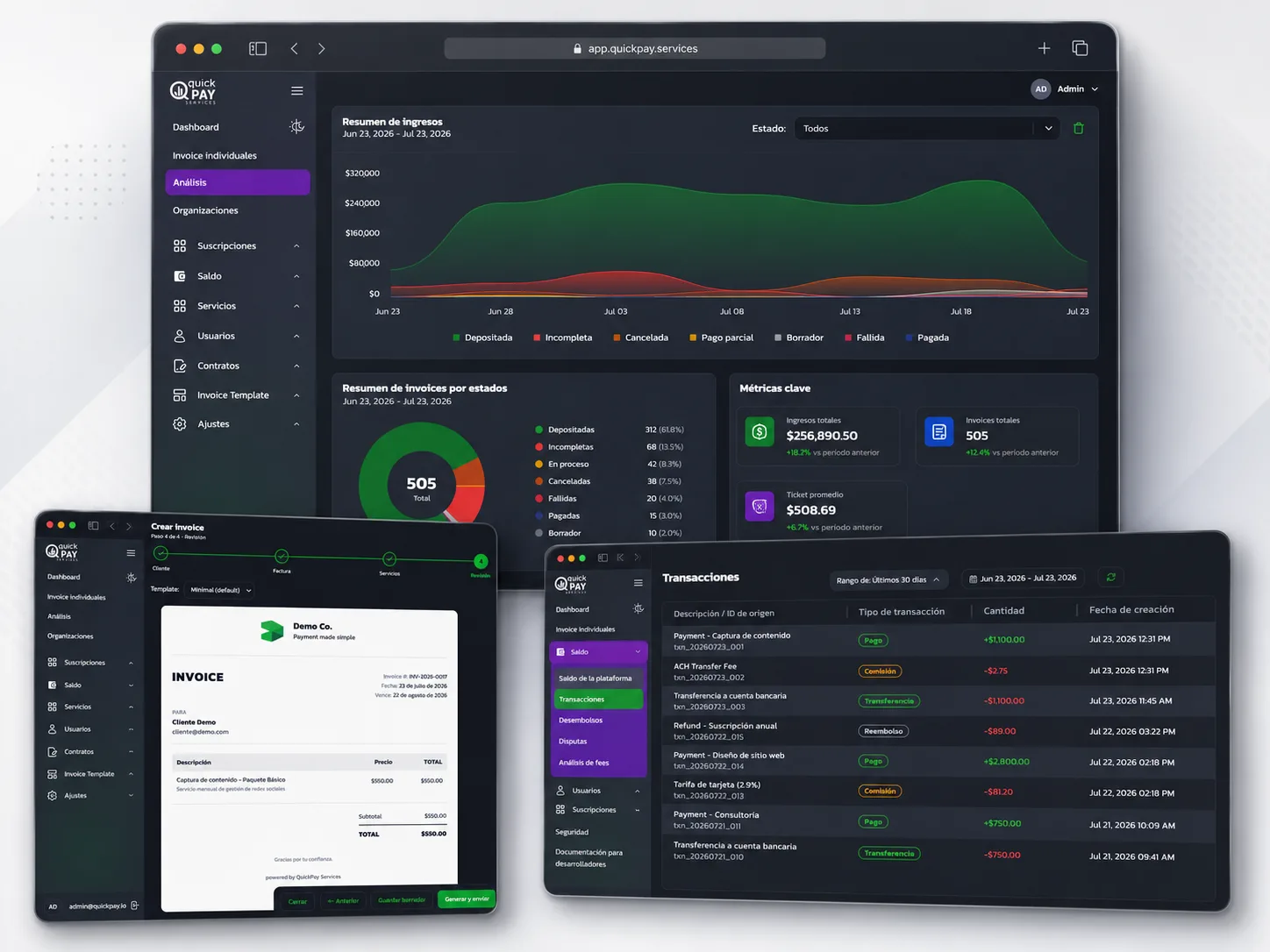
Operational data updated in July 2026.
Context and problem
The starting point
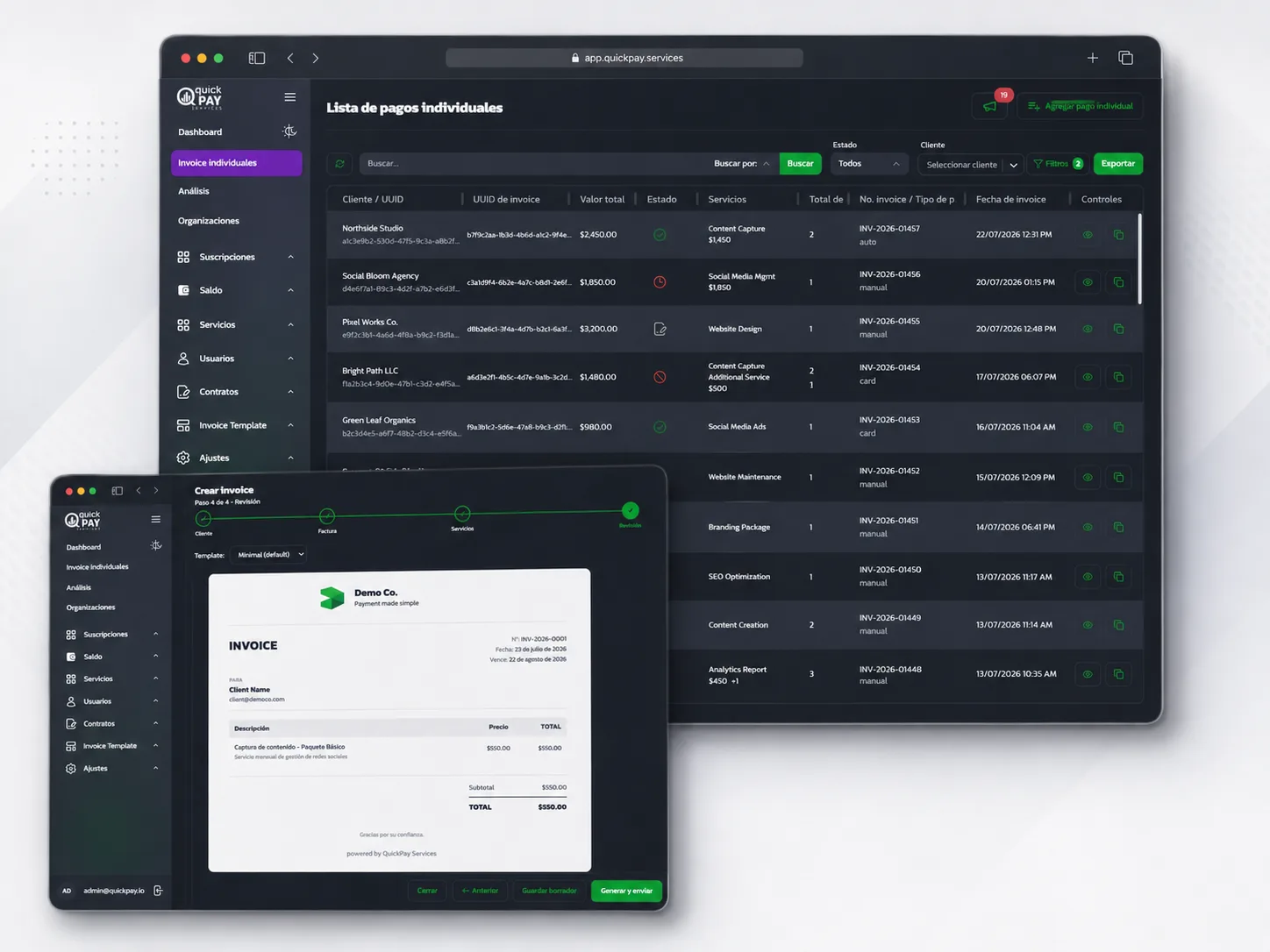
Quick Pay Services began as a replacement for a process built around general-purpose tools. It needed to model Cute Digital Media’s actual operations more accurately: creating and tracking invoices, managing clients, segmenting access by role, and controlling the full invoicing and collections cycle. That internal need became a product opportunity, and the platform evolved into a multitenant SaaS capable of supporting other businesses.
My responsibility
Product, architecture, and execution
I led the product from initial concept and functional definition through production. I designed the architecture, structured the roadmap, translated stakeholder needs into executable tasks, and coordinated a small development team.
During the initial build, I also contributed directly to the backend and frontend. I now direct the product’s evolution, prioritize capabilities, coordinate partners, validate releases, and manage the self-hosted infrastructure: pipelines, servers, domains, CDN, security, monitoring, and development and production environments.
01 / scope
Product evolution
- Internal financial tool: client management, invoice creation and tracking, administrative roles, managers’ access to their own portfolios, and dedicated workflows for accounting and payment confirmation.
- Multitenant SaaS: tenant-level data separation and configuration, onboarding of new businesses, and independent management of users, clients, and financial operations.
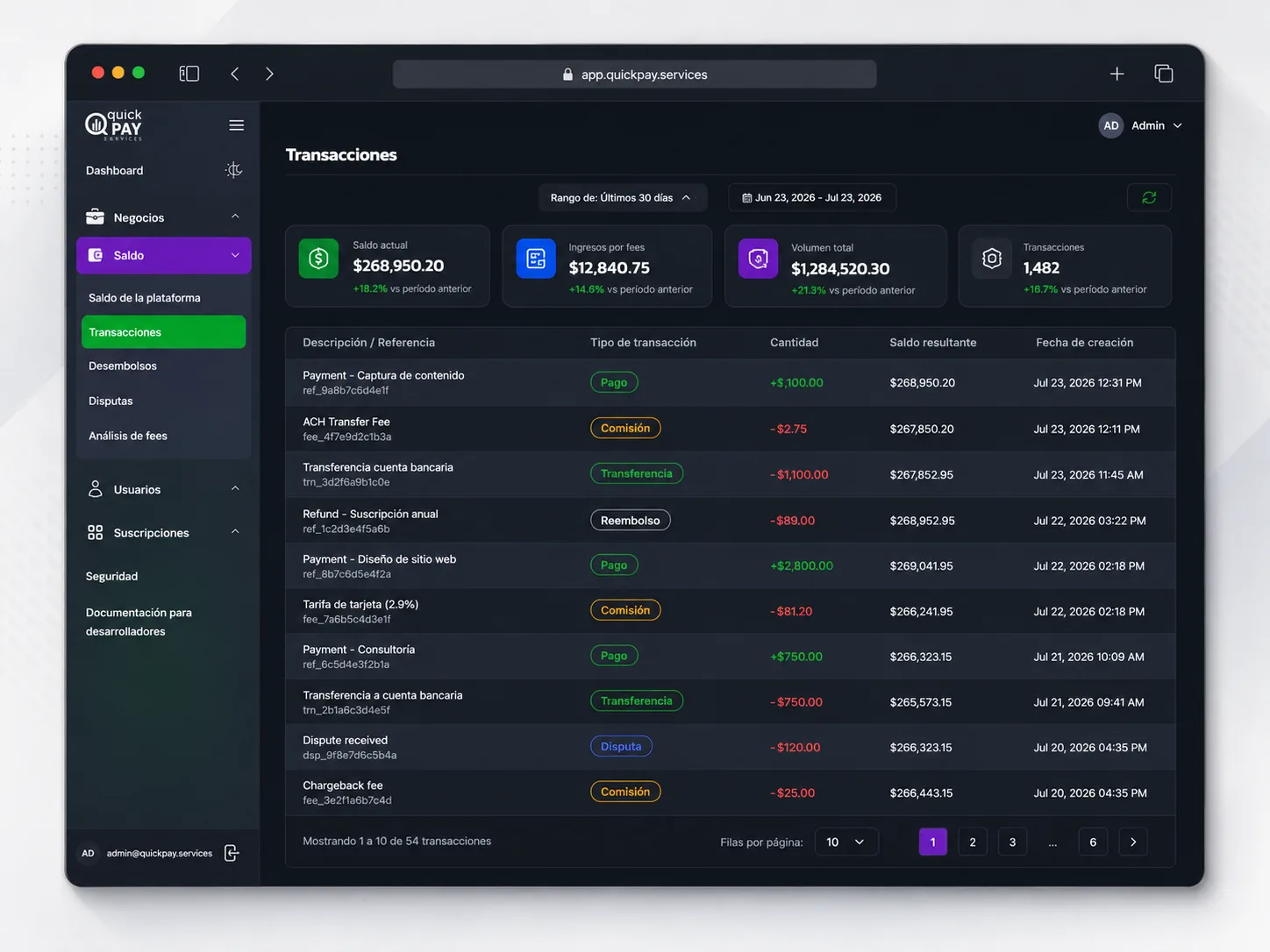
- Payments and integration platform: card and bank payments, payment links, an external API, webhooks, and status synchronization with other products.
02 / partners
Partner model
Quick Pay Services can onboard PAYEE partners that refer new merchants and receive a commission linked to processed volume. This model allows platforms such as TuTike to act as onboarding channels, while associated venues and businesses operate as merchants within Quick Pay Services.
Key decisions
What needed to be clear
- Design the domain as multitenant from the outset, so the platform could evolve commercially without embedding the initial tenant’s rules.
- Separate permissions and visibility by role so managers, accounting teams, and administrators could work in the same system without exposing unnecessary information.
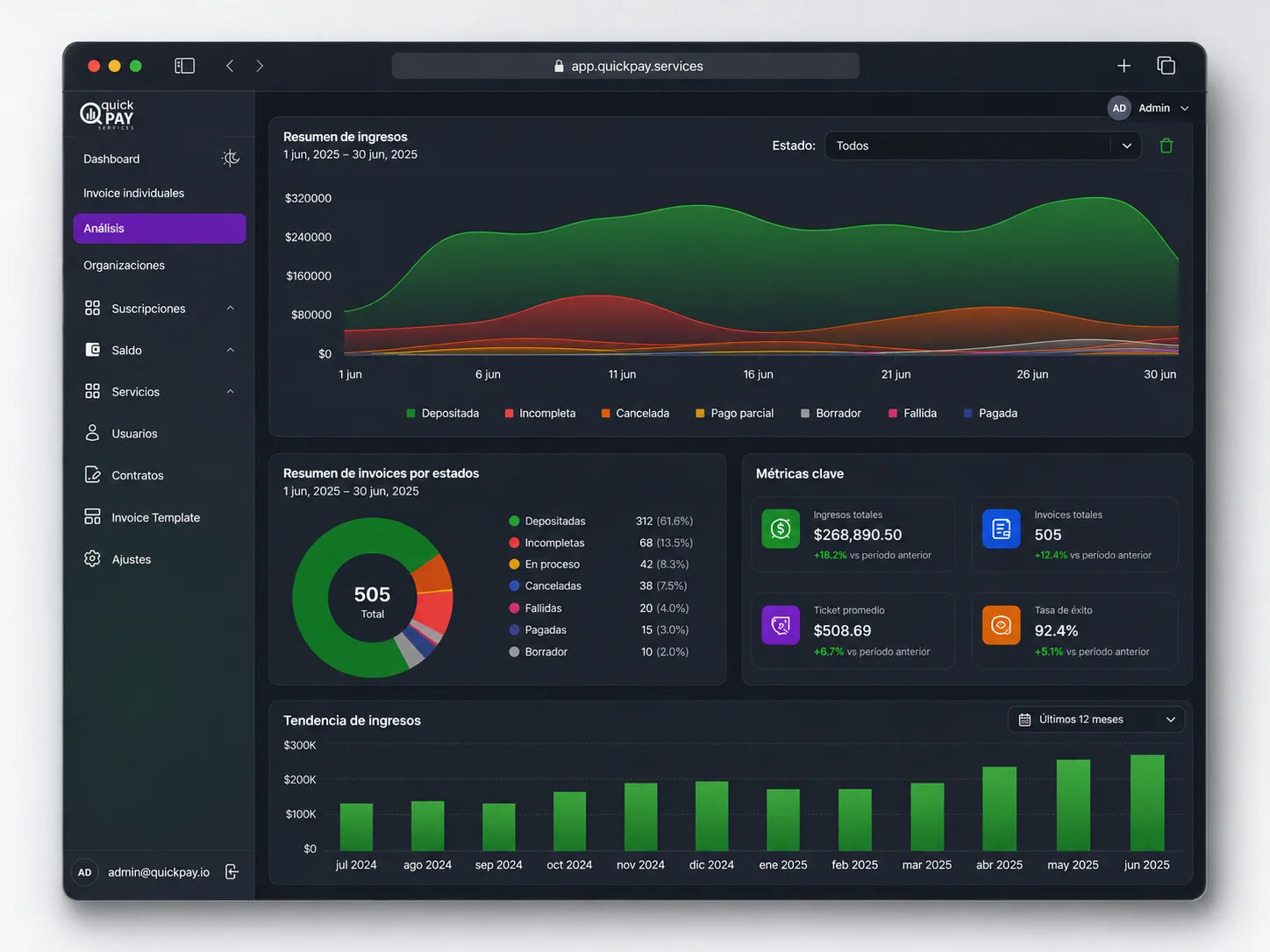
- Model invoice and payment lifecycles as explicit, auditable states.
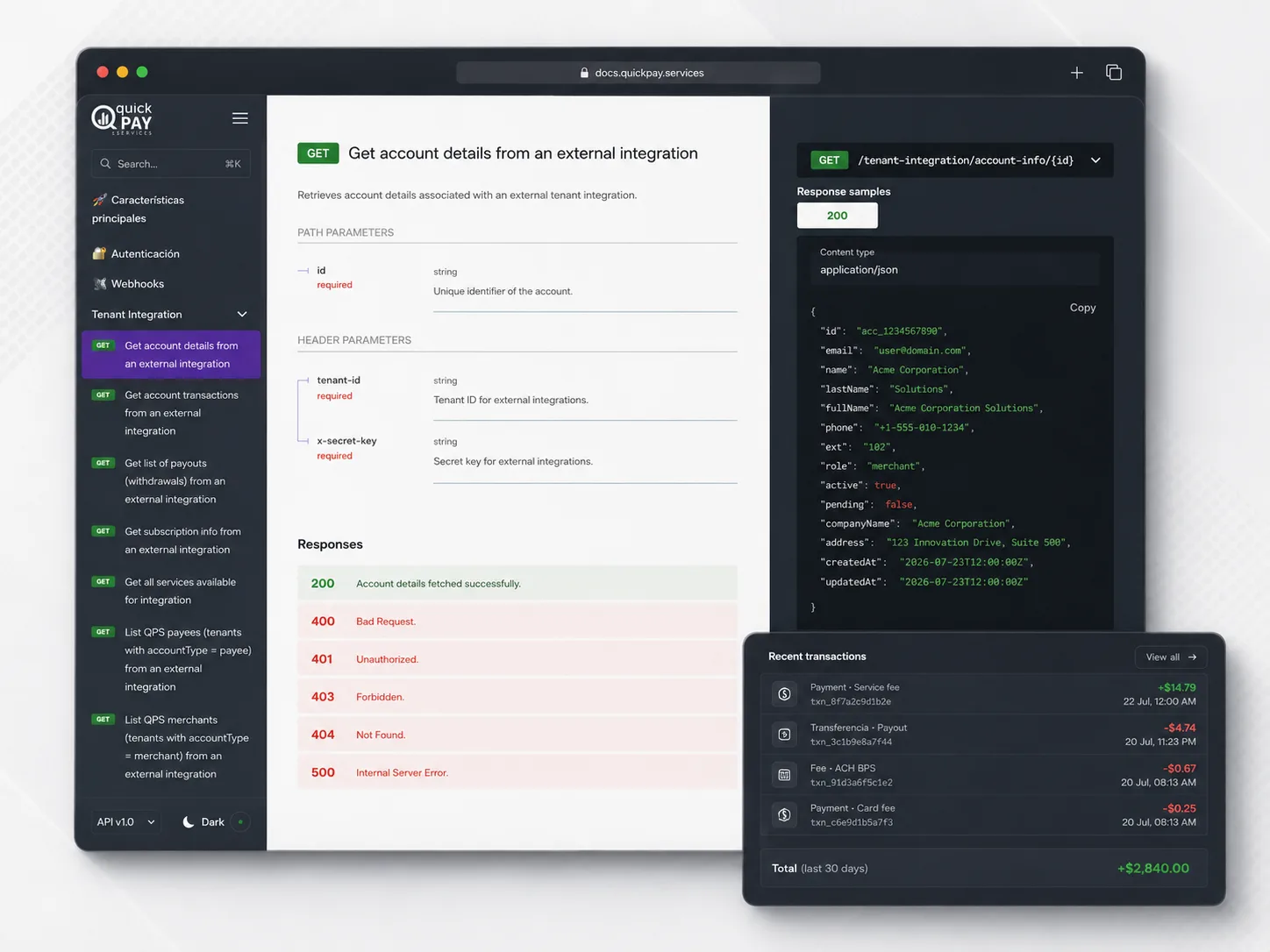
- Expose capabilities through an API, payment links, and webhooks so external products could integrate without duplicating financial logic.
- Integrate Fiserv Forward as processing infrastructure while maintaining one consistent experience for the products that consume it.
Architecture and stack
The technical foundation
Backend
- NestJS
- TypeScript
- TypeORM
- PostgreSQL
- Redis
Frontend
- React
- Vite
- TanStack Table
- Chart.js
Payments
- Fiserv Forward
- Stripe Connect
- Card payments
- ACH
- Payment links
Integrations
- External API
- Webhooks
- White-label
Infrastructure
- Docker + NGINX Proxy Manager
- HAProxy
- European replicas + synchronized deployments
- GitHub Actions
- Sentry + Flipt
Selected capabilities
What this case demonstrates
- Product definition and functional design
- Multitenant architecture
- Backend and frontend
- Payment integrations
- Self-hosted infrastructure
Outcome and impact
A system that is still running
Quick Pay Services evolved from an internal Cute Digital Media tool into a multitenant invoicing and payment-processing SaaS. The platform can run a business’s financial operations while also serving as payment infrastructure for external products such as TuTike.
Case-study gallery
The product in context