02 / EVENTS AND RESERVATIONS / 2024–PRESENT
TuTike
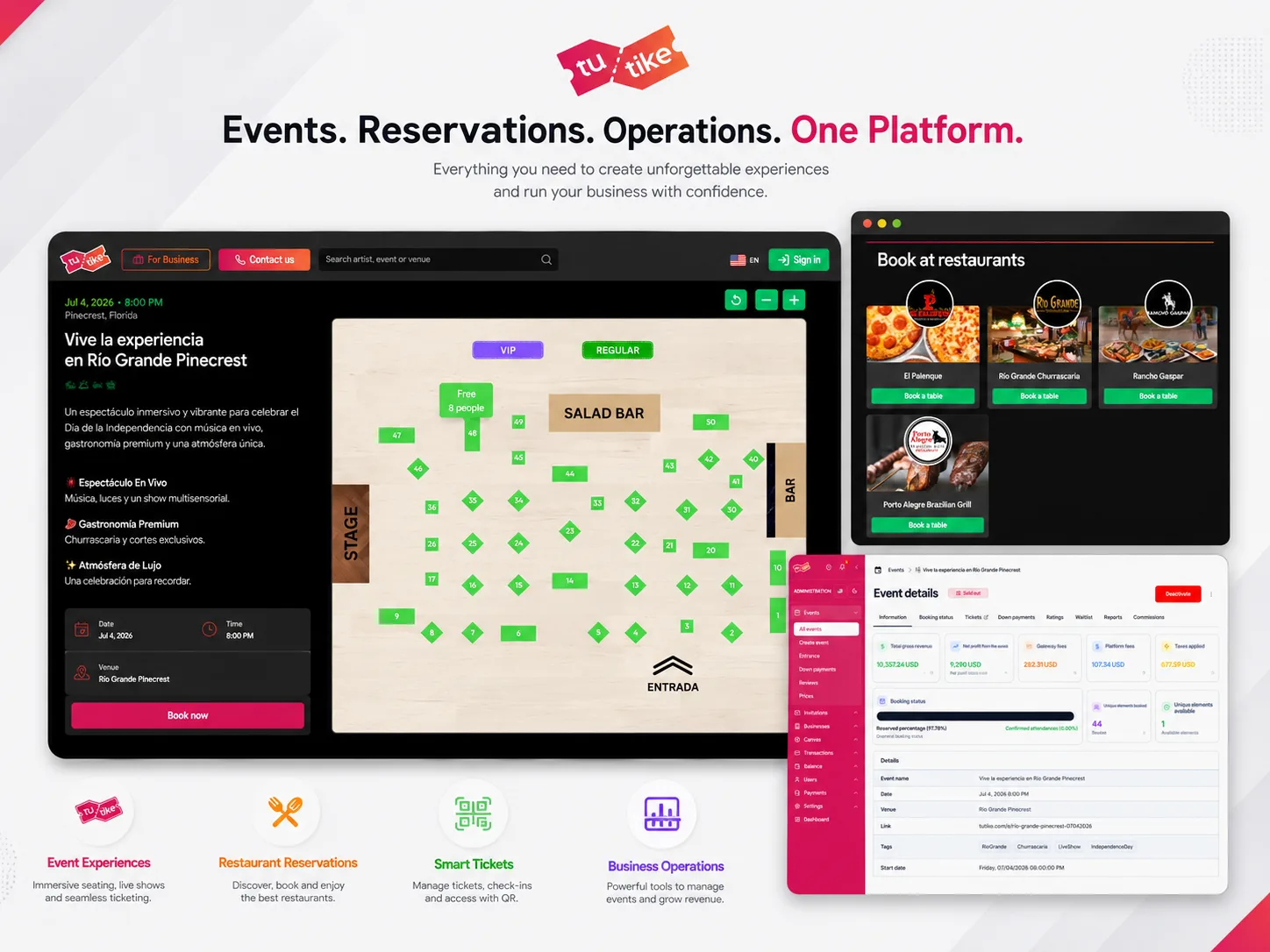
A SaaS platform for events, ticket sales, and business reservations, covering event publishing, payments, operations, validation, and administration.
Operational data updated in July 2026.
Context and problem
The starting point
TuTike was developed in parallel with Quick Pay Services to address two broad domains: event operations and reservation management for restaurants and other businesses. Both modules share cross-cutting capabilities, but they require different experiences, availability rules, and operational flows.
My responsibility
Product, architecture, and execution
Together with stakeholders, I defined the product scope and priorities, designed its architecture, and converted each initiative into implementation plans for a small team.
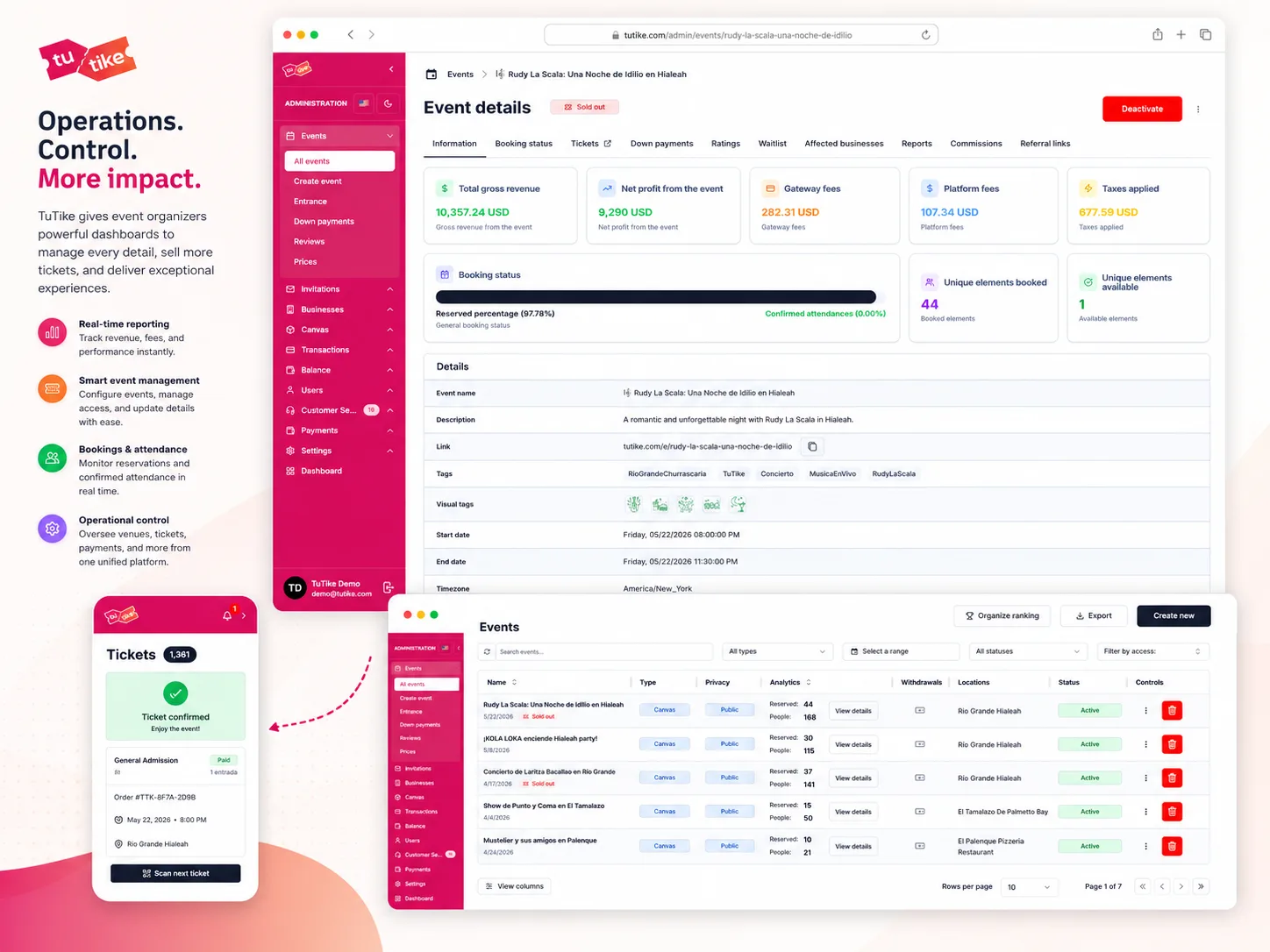
During the initial development, I contributed to the backend and frontend and owned functional and technical release validation. I now manage the roadmap, technical relationships with partners, team planning, validation of new capabilities, and all self-hosted infrastructure: pipelines, servers, domains, CDN, security, monitoring, and environments.
01 / scope
Two domains inside one product
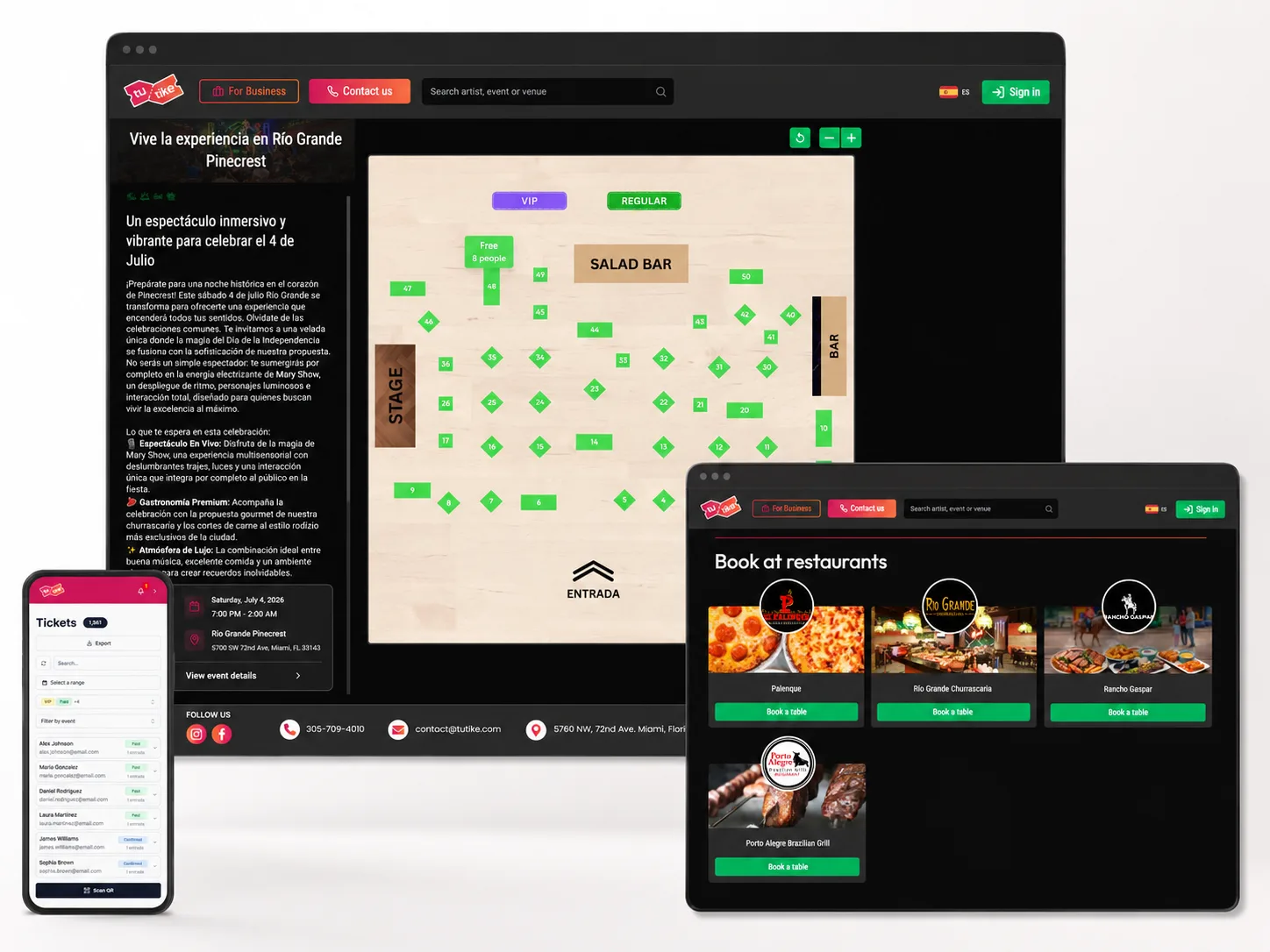
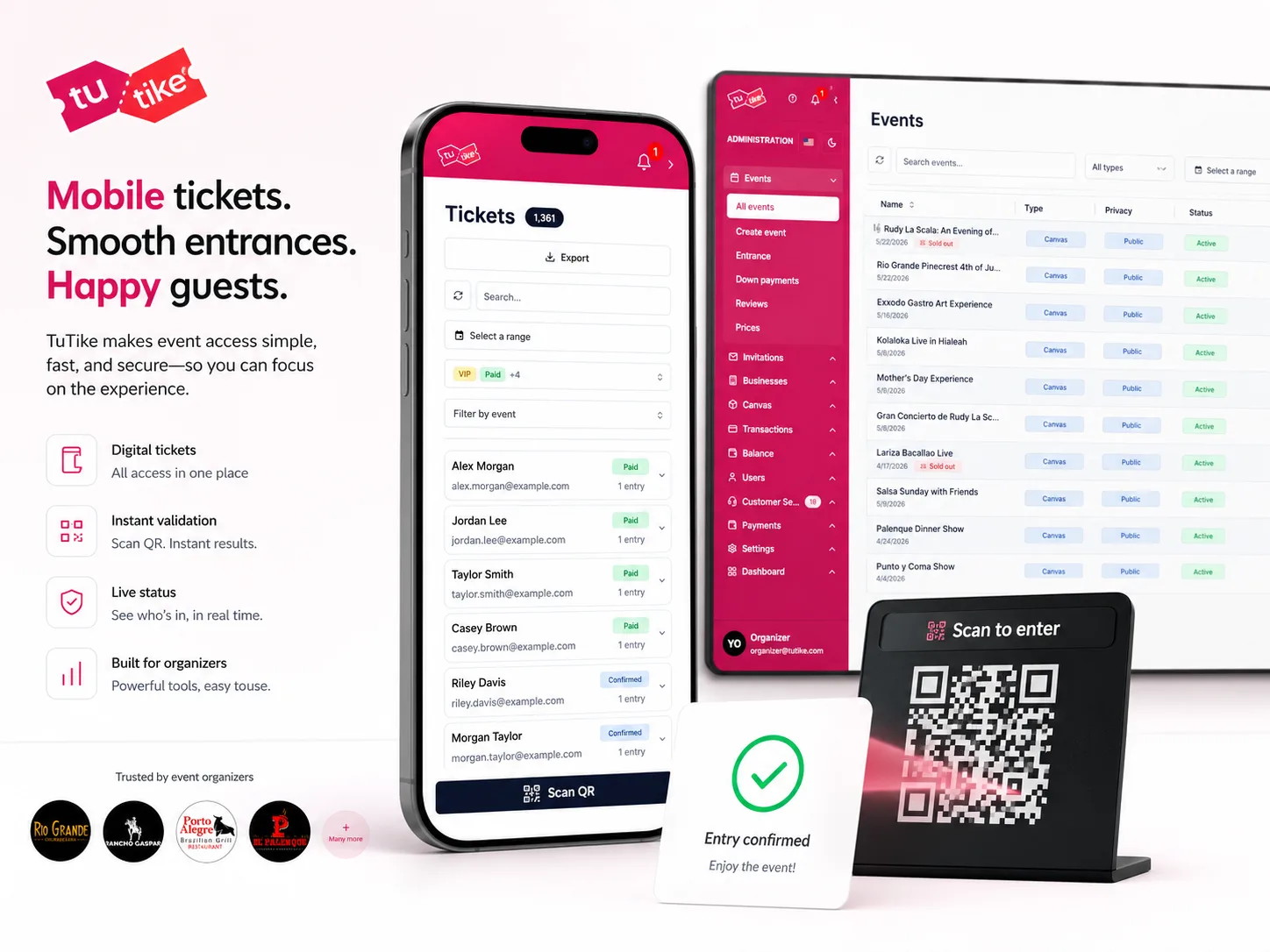
- Events and ticketing: ticket types, canvas-based seat selection, hierarchical zones, fixed prices, price ranges, scalable pricing, private events, promoters, referral links, and entry validation.
- Reservations: availability, schedules, capacity, and free or paid reservations for restaurants, with an architecture ready to support spas and other business types.
- Google integration: businesses can receive reservations directly from their Google profile through Booking End-to-End. When the payment add-on redirect is enabled, bookings started through Google can also complete a payment flow.
- Quick Pay Services integration: payment links, webhook confirmations, and payment-status synchronization with reservation and ticket lifecycles.
Key decisions
What needed to be clear
- Separate event and reservation domains, sharing only clearly defined cross-cutting capabilities.
- Design the event model to support everything from simple tickets to canvases with zones and seats.
- Support multiple pricing models without coupling the purchase flow to a single event type.
- Centralize payment infrastructure in Quick Pay Services and synchronize states through webhooks.
- Maintain distinct admin experiences and create external integration paths through Google Booking End-to-End and a WordPress plugin.
Architecture and stack
The technical foundation
Backend
- NestJS
- TypeScript
- TypeORM
- PostgreSQL
- Redis
Public website
- Next.js
- React 19
- TypeScript
- Next Intl
- Tailwind CSS
Administration
- React
- Vite
- TanStack Table
- Chart.js
- React Hook Form
Integrations
- Google Booking End-to-End
- WordPress plugin
- Quick Pay Services
- Webhooks
- Stripe Connect
Infrastructure
- Docker + NGINX Proxy Manager
- HAProxy
- European replicas + deployment synchronization
- GitHub Actions
- Sentry + Flipt
Selected capabilities
What this case demonstrates
- Product definition
- Modular architecture
- Events and ticketing
- Reservations
- Partner integrations
Outcome and impact
A system that is still running
TuTike is a production platform capable of operating events of varying complexity and handling end-to-end reservations for restaurants and other businesses. It has operated more than 100 events entirely on the platform, integrates 11 businesses through Google Booking, and processed $137,000 through Quick Pay Services from March to July 2026.
Case-study gallery
The product in context